




Memory and cognitive functions: what weakens them daily
You're searching for a name you know. You leave a meeting feeling like half the information hasn't stuck. You reread the same paragraph multiple times before it sinks in.
This isn't an inevitable decline. It's often a sign of one or more cognitive resources being under pressure. Understanding which ones changes the approach.
Memory is not a fixed store
Memory is not a passive storage space. It's a set of dynamic processes that depend on the brain's biological state at any given moment.
Source: Baddeley A. Working memory: theories, models, and controversies. Annual Review of Psychology, 2012.
What weakens memory and cognitive functions
Cortisol, the stress hormone, has a documented effect on the hippocampus, a key area for memory formation. Chronic exposure to high levels can affect synaptic plasticity and memory capacity.
It is during sleep, especially deep sleep phases, that the brain consolidates the day's learning. Insufficient or fragmented sleep compromises this consolidation.
Multitasking, constant information flow, repeated decisions: cognitive overload continuously mobilizes working memory, leaving few resources for encoding and consolidating important information.
Certain micronutrients play a documented role in cognitive functions. Iodine and zinc contribute to normal cognitive functions. Vitamins B12, B9, and C contribute to normal psychological functions.
Source: Lupien SJ et al. Effects of stress throughout the lifespan on the brain, behaviour and cognition. Nature Reviews Neuroscience, 2009.
Levers to support memory and cognitive functions
This is the most powerful lever for memory. A regular evening routine and sufficient quality sleep are biological conditions for good memory consolidation.
Prioritizing, segmenting tasks, limiting multitasking: these adjustments free up working memory capacity for what truly matters.
Certain natural active ingredients support cognitive functions and memory in a documented way. Bacopa monnieri is one of the most studied for its role in memory. CDP-choline is documented for its role in supporting cognitive functions.
To learn more, read our article on functional brain nutrition.
What MySynapz observes
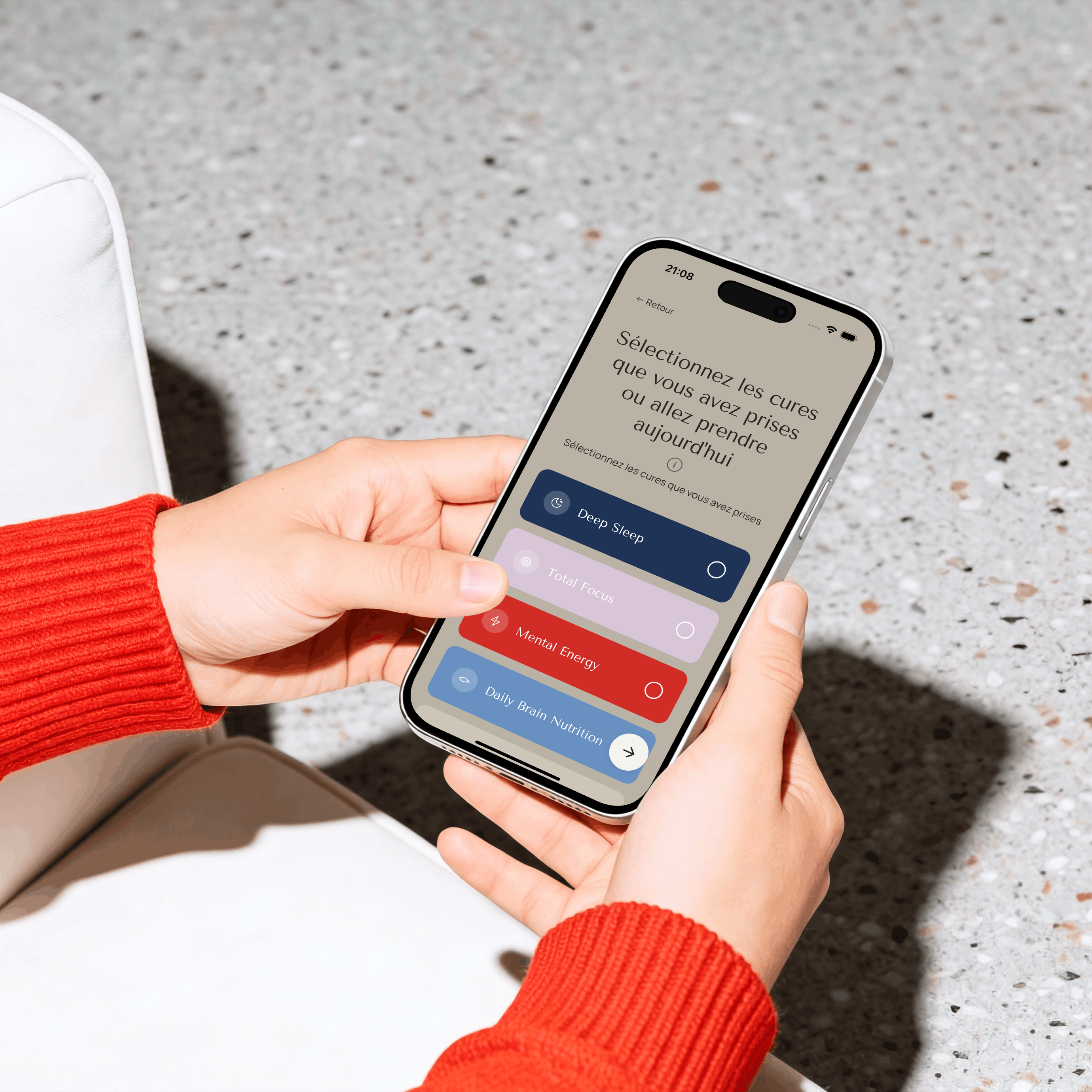
Memory and cognitive functions are central indicators of the MySynapz diagnosis. Their daily monitoring allows identifying the most effective patterns and levers for each profile.
Observing your cognitive resources is the first step to better supporting them.
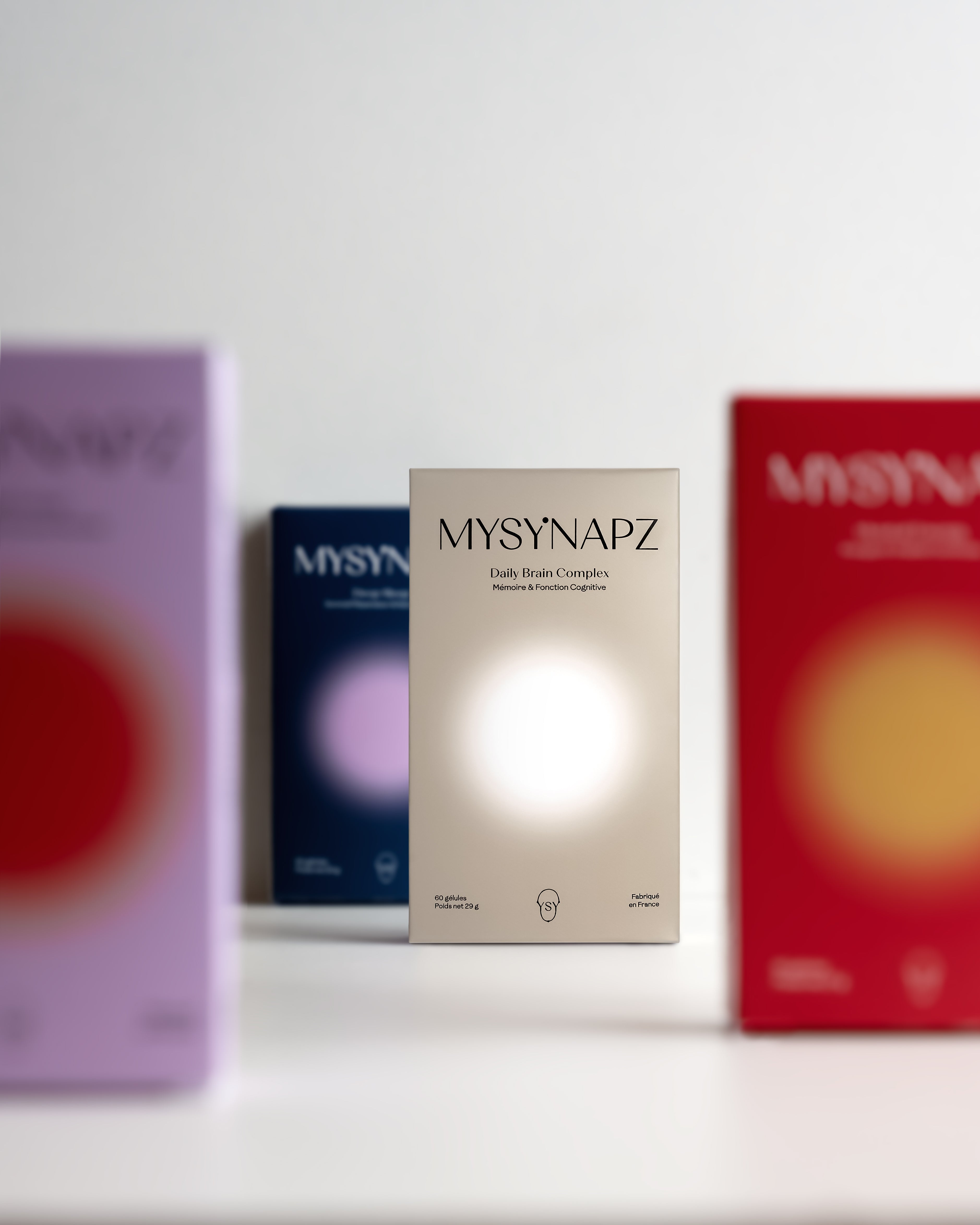
Daily Brain Complex, MySynapz
Lion's Mane · CDP-choline · Bacopa · Zinc · Iodine
Magnesium · Vitamins B9, B12, C
Discover Daily Brain ComplexFrequently asked questions
Neuroplasticity remains active in adulthood. The brain retains the ability to form new neural connections. With the right levers, memory function can be supported and maintained measurably.
Yes. High levels of cortisol over the long term can affect the hippocampus and the quality of memorization. Acting on stress management is therefore also a lever for memory.
Active ingredients acting on memory, such as Bacopa, are documented for effects after several weeks of regular intake. Memory responds to progressive approaches rather than immediate solutions.
Memory cannot be decreed. It is cultivated, gradually, through habits, sleep, and nutritional support adapted to your profile.
Start with your MySynapz diagnosis to identify if memory and cognitive functions are priority levers for you.
1. Baddeley A. Working memory: theories, models, and controversies. Annual Review of Psychology, 2012.
2. Lupien SJ et al. Effects of stress throughout the lifespan on the brain. Nature Reviews Neuroscience, 2009.
Read more

Coffee increases alertness, but it alone does not cover all aspects of a demanding task. Comparison with Total Focus and its synergy of moderate caffeine, L-theanine, L-tyrosine, and Rhodiola.

Working memory and long-term memory are not activated by the same mechanisms. This is why a fundamental approach with Daily Brain Complex changes the logic of supporting cognitive functions.

Discover your cognitive profile and receive personalized recommendations.
A structured approach to better understand the needs of your cognitive functioning and to take concrete action.
Targeted formulas, based on research
Each collection addresses a specific cognitive need (concentration, energy, sleep or emotional balance) by relying on documented ingredients and dosages consistent with available data.