

Why certain approaches change the quality of attention, not just its intensity
You can force your attention for a few hours. You know the feeling: an iron will to stay on task, a constant conscious effort, and at the end of the day, fatigue disproportionate to what was produced.
There is another way to work. Not more intensity, but better quality of attention. The difference is biological.
Sustained attention vs. forced attention: two different mechanisms
Forced attention relies on a conscious effort of cognitive control. The prefrontal cortex mobilizes its resources to maintain focus despite distractions. This is effective in the short term, but very costly in cognitive resources.
Quality sustained attention, on the other hand, relies on a favorable biological state: balanced neurotransmitters, a managed stress response, a stable level of vigilance. In this state, maintaining attention requires less effort.
Source: Posner MI, Petersen SE. The attention system of the human brain. Annual Review of Neuroscience, 1990.
What applied neuroscience says
The quality of attention depends on several neurochemical systems. Dopamine plays a role in motivation and maintaining focus. Noradrenaline modulates vigilance and attentional selectivity.
When these systems are properly supported, attention is fluid, precise, and low-cost. When they are disrupted by stress or fatigue, the cognitive effort increases for a lesser result.
To understand the brain mechanisms at play, read our article on how the brain really works and applied neuroscience.
The L-theanine and caffeine combination: a synergy logic
Caffeine alone increases vigilance but can also increase agitation in some sensitive individuals. L-theanine, an amino acid naturally present in green tea, supports a calmer and more stable state of alertness.
The combination of the two is one of the most studied in the literature on cognitive performance. It is associated with improved attentional precision and a reduction in the undesirable effects of caffeine alone.
Source: Haskell CF et al. The effects of L-theanine, caffeine and their combination on cognition and mood. Biological Psychology, 2008.
The Total Focus approach
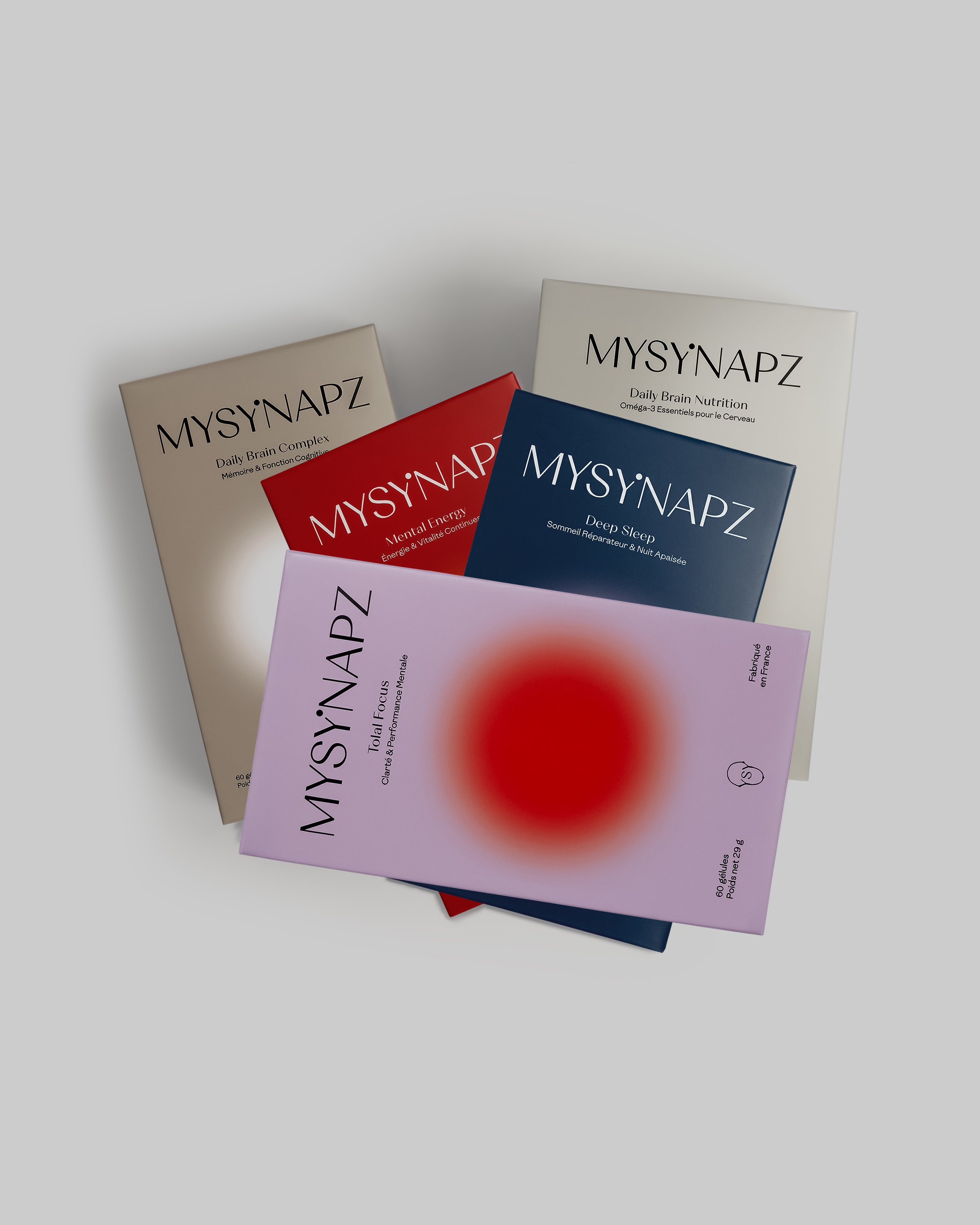
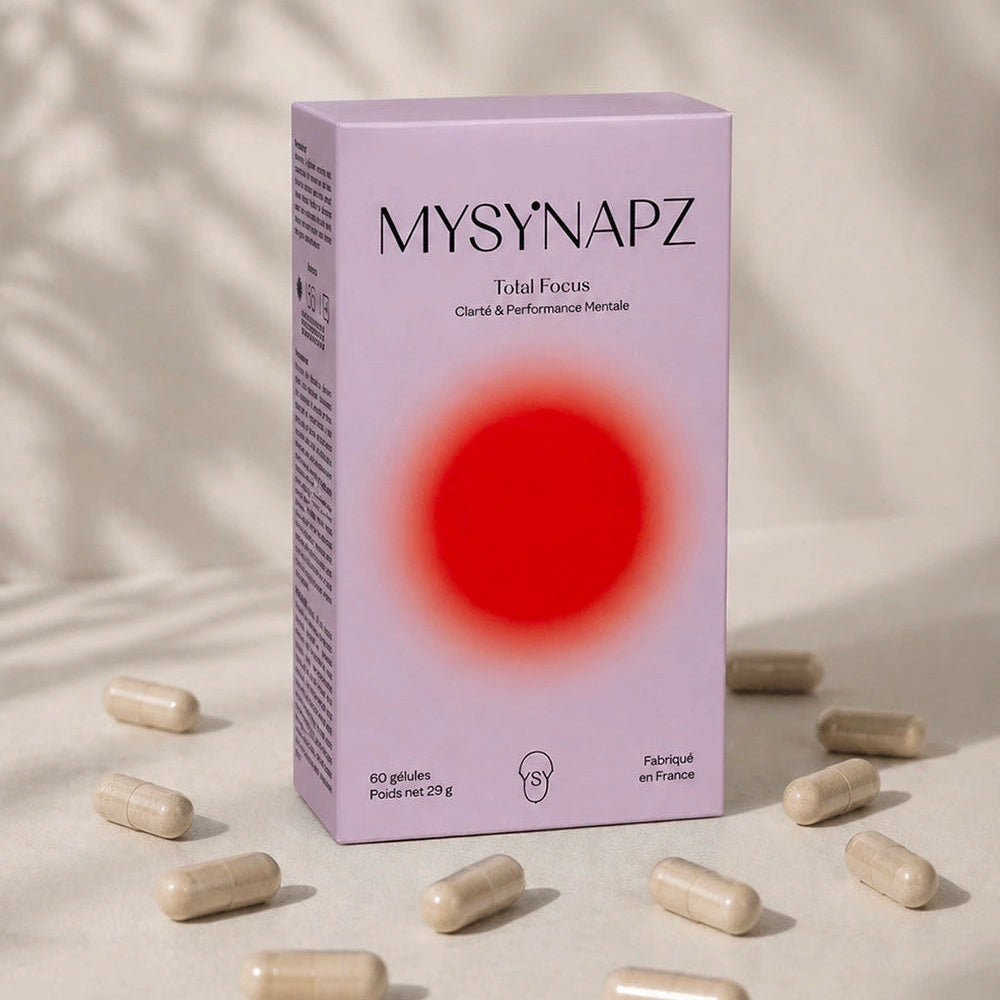
Total Focus was formulated for moments when the quality of attention truly matters. The formula is based on a synergy logic between several families of active ingredients.
HPMC vegetable capsules · No superfluous excipients · Made in France · 2 capsules in the morning or early in the day
What MySynapz observes
The quality of attention varies considerably from one profile to another. The MySynapz method integrates monitoring mental clarity and performance as diagnostic indicators to identify the right lever according to the profile.
A brain under stress is not understood intuitively. It is observed.
Total Focus, MySynapz
L-Tyrosine · L-Theanine · Anhydrous Caffeine · Rhodiola
Lion's Mane · Vitamins B6 and B12
Discover Total FocusFrequently Asked Questions
Yes, as part of a morning routine. The caffeine dose is moderate (75 mg). If you are sensitive to it, start with one capsule to assess your tolerance.
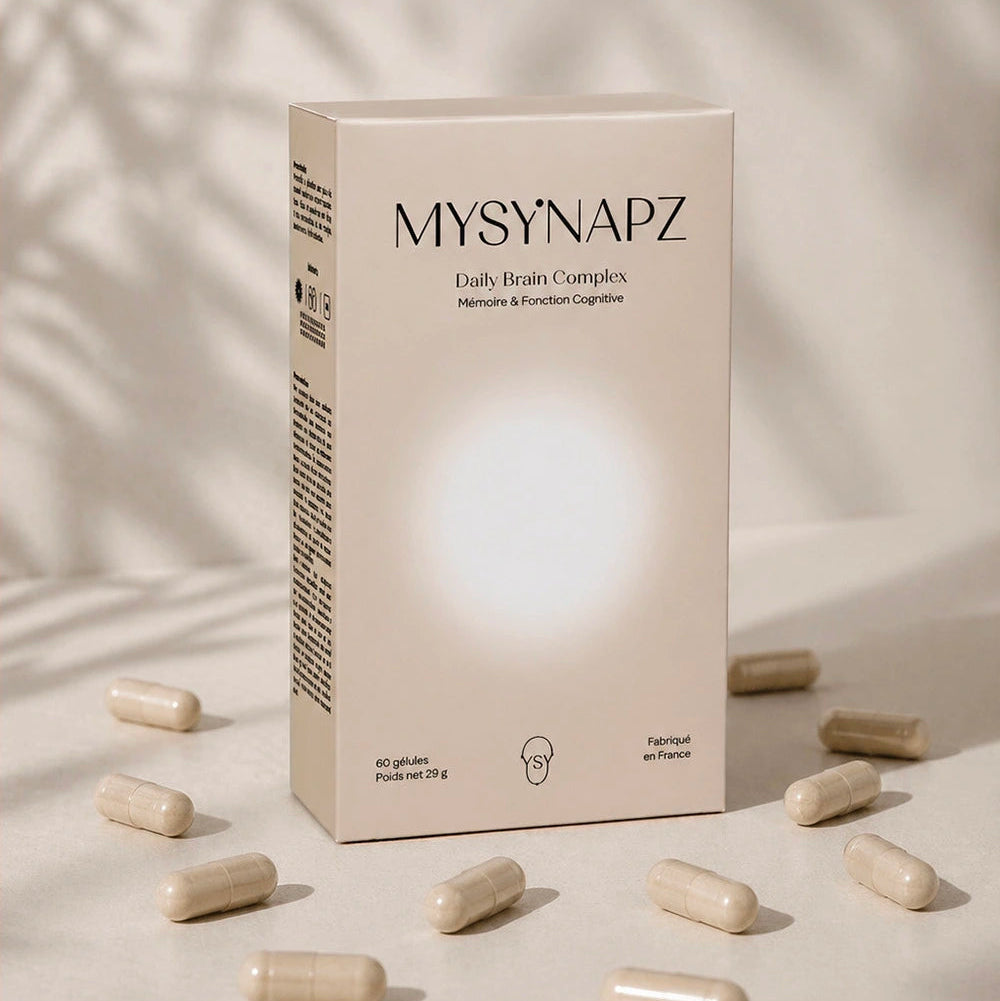
Total Focus is formulated for immediate cognitive performance: clarity, vigilance, sustained attention. Daily Brain Complex is a long-term course to support memory and cognitive functions over time. Both can be complementary depending on the profile.
In the morning or early in the day. The presence of caffeine advises against taking it late in the afternoon for sensitive individuals.
Rhodiola and L-theanine support cognitive stress management. Total Focus can be particularly useful during periods of high pressure, in addition to good recovery habits.
The quality of attention is not a matter of discipline. It's a matter of biological state. And this state can be worked on, monitored, and adjusted.
Start with your MySynapz diagnosis to identify if mental clarity and performance are priority levers for you.
Scientific sources:
1. Posner MI, Petersen SE. The attention system of the human brain. Annual Review of Neuroscience, 1990.
2. Haskell CF et al. The effects of L-theanine, caffeine and their combination on cognition and mood. Biological Psychology, 2008.
Read more

Deadline in two hours and you can't focus? It's not a lack of willpower. It's a biological response. Here's what happens in the brain under pressure.

Coffee increases alertness, but it alone does not cover all aspects of a demanding task. Comparison with Total Focus and its synergy of moderate caffeine, L-theanine, L-tyrosine, and Rhodiola.

Discover your cognitive profile and receive personalized recommendations.
A structured approach to better understand the needs of your cognitive functioning and to take concrete action.
Targeted formulas, based on research
Each collection addresses a specific cognitive need (concentration, energy, sleep or emotional balance) by relying on documented ingredients and dosages consistent with available data.