

Why concentration drops under pressure: what really happens in the brain
You have a deadline in two hours. The pressure is mounting. And paradoxically, that's exactly when your brain refuses to cooperate. Thoughts scatter. You reread the same line. You can no longer stay focused on a single task.
This is not a lack of willpower. It's a perfectly logical biological response, but one that is poorly calibrated for the demands of contemporary work.
Understanding what happens in the brain under pressure completely changes the approach.
The Yerkes-Dodson curve: why pressure helps up to a certain point
The relationship between pressure and cognitive performance is not linear. Yerkes and Dodson's work, formalized at the beginning of the 20th century and often used as a reference model for understanding the link between arousal level and performance, describes a bell-shaped curve.
It's in this third zone that many people chronically work.
Source: Yerkes RM, Dodson JD. The relation of strength of stimulus to rapidity of habit formation. Journal of Comparative Neurology and Psychology, 1908.
What biologically happens under pressure
The prefrontal cortex is the brain area involved in cognitive control: planning, decision-making, maintaining attention, inhibiting distractions. It allows us to stay focused on a complex task despite external demands.
Under acute stress, the secretion of cortisol and noradrenaline increases. At moderate doses, these hormones enhance vigilance. At high or prolonged doses, they can impair prefrontal cortex function, reducing its ability to filter out irrelevant information and maintain sustained attention.
When pressure becomes too high, the brain can lose some of its ability to focus on what matters.
Source: Arnsten AF. Stress signalling pathways that impair prefrontal cortex structure and function. Nature Reviews Neuroscience, 2009.
When the prefrontal cortex is overwhelmed, the amygdala, the emotional and threat processing center, gradually takes over. It directs attention towards potential threat signals rather than the task at hand. This is why under pressure, intrusive thoughts intensify, and it becomes difficult to stay focused on one thing.
Sustained concentration consumes limited cognitive resources. The greater the pressure, the faster these resources are depleted. This phenomenon, sometimes called cognitive exhaustion, is well-documented: after a certain amount of intense cognitive effort, the quality of information processing decreases.
Source: Hagger MS et al. Ego depletion and the strength model of self-control. Psychological Bulletin, 2010.
What applied neuroscience says
Concentration is not a fixed quality. It's a dynamic function that depends on the brain's biological state at a given moment. It is influenced by stress levels, the quality of sleep the previous night, micronutrient intake, accumulated fatigue levels, and the regularity of cognitive breaks.
To understand how the brain manages its cognitive resources, consult our article on how the brain really works in everyday life and applied neuroscience.
Levers for maintaining concentration under pressure
Working in concentration blocks of 45 to 90 minutes with complete breaks between sessions is more effective than trying to maintain continuous attention for several hours. The brain recovers better with regular breaks than with prolonged effort.
Notifications, multitasking, interruptions: each task switch has a cognitive cost, even a brief one. Studies show that after an interruption, it takes several minutes to regain the same level of concentration. Working in focus mode with distractions cut off is a biological requirement, not a luxury.
Certain nutrients and active ingredients can support cognitive function, especially when they contribute to the normal functioning of the nervous system or energy metabolism.
To learn more about the role of nutrition in cognitive functions, consult our article on the functional nutrition of the brain.
The role of targeted active ingredients
For some people, in certain contexts of high cognitive pressure, targeted nutritional support can complement behavioral levers.
The goal is not to force concentration. It is to support the brain's biological resources during times of high pressure: supporting normal nervous system function, assisting the stress response, maintaining vigilance within a regular cognitive routine.
What MySynapz observes
Concentration under pressure is one of the most telling indicators of the MySynapz diagnostic. It reveals how the brain manages its resources in critical moments and which levers are priorities for each profile.
Some people need sustained support to maintain their cognitive level over long days. Others need targeted support for moments of high, temporary pressure.
What is not observed cannot be adjusted.
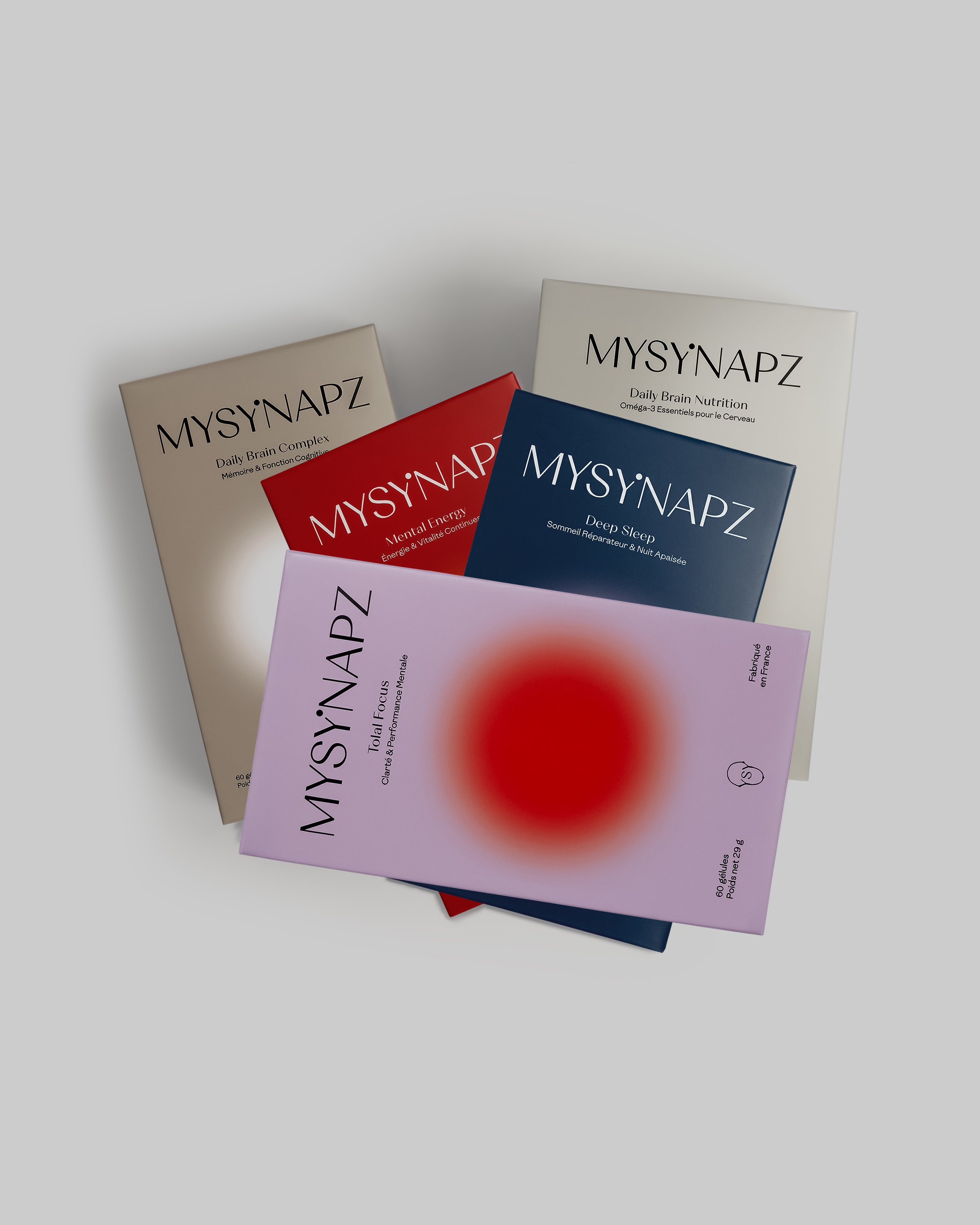
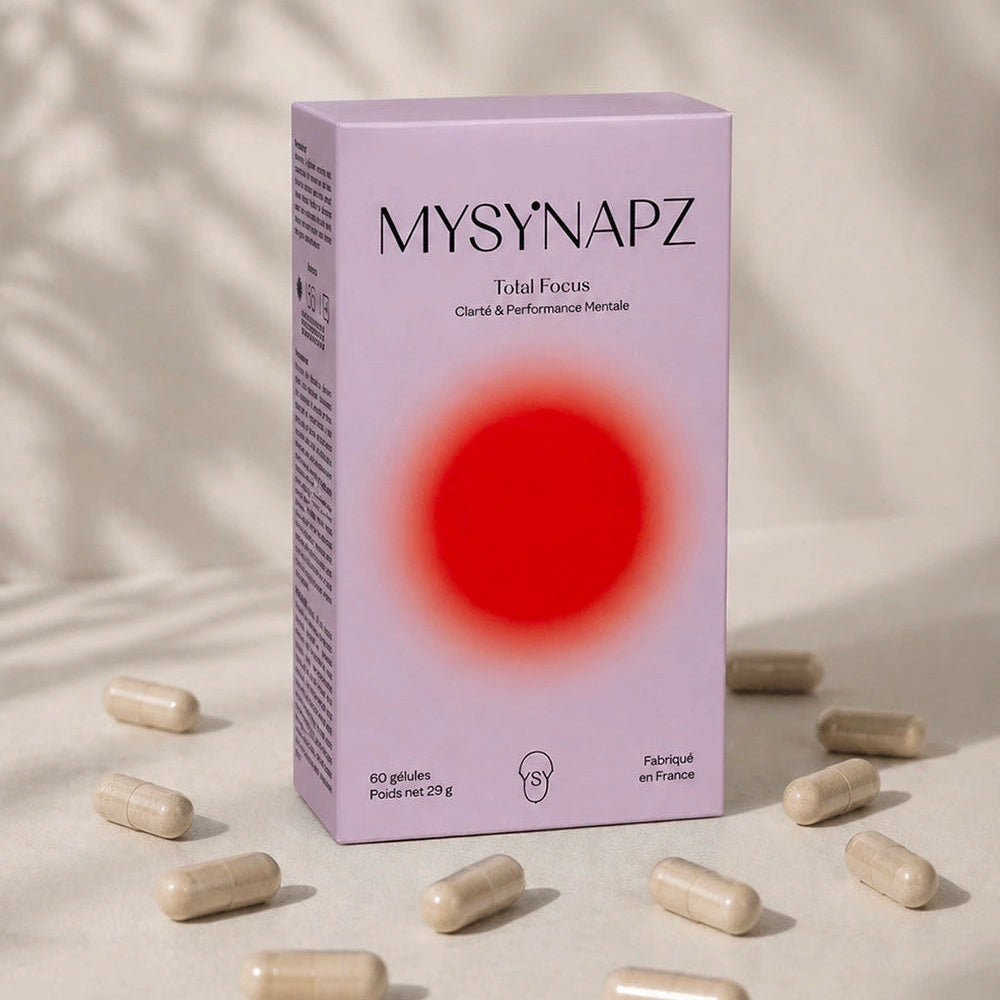
Total Focus, MySynapz
L-Tyrosine · L-Theanine · Anhydrous Caffeine · Rhodiola
Lion's Mane · Vitamins B6 and B12
Discover Total FocusFrequently Asked Questions
This is a normal biological response. Under high stress, the prefrontal cortex can be disrupted by stress hormones. The amygdala partially takes over, directing attention to threat signals rather than the task. This is effective for survival but counterproductive for cognitive performance.
Caffeine temporarily increases alertness by blocking adenosine receptors. It can help in the short term. But for some sensitive individuals, or during periods of high pressure, it can increase nervousness or agitation. The combination of caffeine and L-theanine is often better tolerated, as L-theanine promotes a more stable state of alertness.
Studies on cognitive performance suggest that blocks of 45 to 90 minutes are optimal for sustained concentration on complex tasks. Beyond that, processing quality decreases, even if subjective effort is maintained.
Concentration needs to be nurtured. Regular sleep, cognitive load management, active breaks, targeted nutritional support, and daily monitoring of cognitive indicators are the most documented levers. The MySynapz method integrates this progressive and measurable approach.
Concentration under pressure is not a matter of discipline. It's a matter of biological resources available when you need them.
Start with your MySynapz diagnosis to identify how your brain manages its cognitive resources under pressure.
Scientific sources:
1. Yerkes RM, Dodson JD. The relation of strength of stimulus to rapidity of habit formation. Journal of Comparative Neurology and Psychology, 1908.
2. Arnsten AF. Stress signalling pathways that impair prefrontal cortex structure and function. Nature Reviews Neuroscience, 2009.
3. Hagger MS et al. Ego depletion and the strength model of self-control. Psychological Bulletin, 2010.
Read more

Coffee, sugar, snack, movement, nap, or Mental Energy: comparison of the options actually available against the 3 PM slump, and why no quick fix alone is enough in the long run.

Forcing concentration is not enough. What truly changes the quality of attention is the biological state of the brain at the moment it's needed. This is the MySynapz approach.

Discover your cognitive profile and receive personalized recommendations.
A structured approach to better understand the needs of your cognitive functioning and to take concrete action.
Targeted formulas, based on research
Each collection addresses a specific cognitive need (concentration, energy, sleep or emotional balance) by relying on documented ingredients and dosages consistent with available data.